How to Become a Mobile Beauty Therapist: Skills, Kit, Clients
Moving your practice into clients' homes takes more than a kit bag. Here is the practical path from qualification and insurance to pricing and finding clients who book on trust.

In brief
- 01A mobile beauty therapist needs recognized qualifications plus public liability and treatment insurance before accepting a single home visit.
- 02A portable kit should replicate salon hygiene standards, not just salon tools, with disposable liners and sealed single-use items for each client.
- 03Pricing for home visits has to account for travel time and setup, not just the treatment itself, which is why mobile rates differ from salon price lists.
- 04Independent marketing is slow for home-based work because clients want proof of vetting before they let a stranger into their house.
- 05Verified platforms like ORES bring pre-qualified, high-end clients to therapists instead of requiring therapists to chase leads themselves.
Key takeaways
- Before your first home visit you need recognized qualifications, public liability insurance and treatment insurance.
- A portable kit has to meet salon hygiene standards as well as carry salon tools. That means disposable liners and sealed single-use items for every client.
- Home-visit pricing has to cover travel time and setup as well as the treatment, which is why mobile rates differ from salon price lists.
- Building a client base on your own is slow for home-based work, because clients want proof of vetting before they let a stranger into their house.
- Verified platforms like ORES bring pre-qualified, high-end clients to therapists, so therapists do not have to chase leads themselves.
Learning how to become a mobile beauty therapist comes down to four things. You qualify, you insure, you build a kit that keeps salon-grade hygiene, and you price for the full time a home visit takes. After that comes the hardest part: finding clients who trust you enough to open their door. At ORES, we connect a curated circle of verified beauty, wellness and lifestyle professionals with clients who want private, high-end at home beauty services. This guide follows the path from your first qualification to your first booking.
What a Mobile Beauty Therapist Does Differently From a Salon Employee
A salon employee walks into a prepared room. Reception has booked the client, the towels are laundered, the lighting is fixed and a manager handles complaints. A mobile beauty therapist carries all of that in the car, and arrives as a guest in someone else's home.
Services You Can Offer at Home
Most treatments travel well if you plan for them. The categories in highest demand for at home beauty services include:
- Hair styling, blow-drying and occasion hair
- Makeup for events, photography and bridal parties
- Facials and advanced skincare
- Massage and body treatments
- Manicures, pedicures and gel work
- Brows and lashes
- Spa-style rituals that combine several treatments in one visit
Some services need more than a bag of tools. Facials that use electrical equipment need a safe power supply. Color work needs access to water. Massage needs floor space for a couch. Choose your service menu around what you can deliver well in an unfamiliar room, rather than everything you are trained to do.
How Your Day Changes Without a Salon Behind You
You become the receptionist, the cleaner, the stock manager and the driver. Your working day includes loading the car, travel, setting up, the treatment itself, packing down and cleaning your kit before the next appointment.
The setting changes how you work. You adapt to the light, the furniture and the household. A client may have children, pets or staff nearby. Discretion is part of the service: arrive on time, keep your voice low, respect the home, and leave the room exactly as you found it. Clients who book at home are often paying for privacy as much as for the treatment.
How to Become a Mobile Beauty Therapist: Qualifications and Insurance Before Your First Home Visit
Working alone in a client's home means no supervisor checks your technique and no salon policy covers your mistakes. Credentials and cover come before the first booking.
Core Beauty Therapy Qualifications
The right qualification depends on where you work and what you offer. Requirements vary by country and region, so check the licensing rules that apply to you. In the UK, the Level 3 NVQ Diploma in Beauty Therapy General is a common benchmark. It usually requires a Level 2 Beauty Therapy qualification or equivalent for entry, and full-time study can run 18 hours per week over roughly one year.
Advanced work carries a higher bar. Several insurers require an NVQ Level 3 or equivalent before they will cover treatments such as facials using electrical equipment or more invasive massage techniques. In practice, your qualification decides what you can insure, and your insurance decides what you can sell.
Public Liability and Treatment Insurance
Mobile beauty therapist insurance is not optional, and an employer's policy will not stretch to cover you. A salon owner's insurance usually will not cover an independent mobile therapist, so you need your own public liability and treatment-risk policy. That same source notes that working away cover is essential for home visits and off-site appointments.
The UK market gives a useful sense of scale:
- Public liability cover for mobile beauty starts from around £5.58 a month, and 97% of Simply Business customers choose £1 million of cover.
- Professional bodies such as the Beauty Guild recommend at least £1 million in public liability cover.
- Claims from mobile beauticians average £3,025, which is a strong reason to carry treatment-risk cover.
- Portable equipment cover can cost around £5.38 a month for £5,000 of replacement cover, based on an annual income of up to £25,000.
Outside the UK, the categories of cover are similar even though the figures and providers differ.
Hygiene and Safety Standards for Home Visits
Insurers expect single-use gloves, aprons and a clean treatment space. The Health and Safety Executive emphasizes risk assessments for mobile work, including the safe transport of chemicals.
Write a short risk assessment for each service. Note the hazards, such as trailing cables, spills, allergic reactions and heavy lifting, and record how you control each one. Patch test where a product calls for it, and keep a consultation record for every client. For a wider view of what can go wrong in a home setting, read our guide to the mistakes that undermine at-home beauty treatments.
Building a Portable Kit That Performs Like a Salon Station
A mobile beauty therapist kit should produce the same result in a penthouse, a hotel suite or a country house. Pack for the treatment, for hygiene and for the room you have not yet seen.
The Non-Negotiables in Every Kit Bag
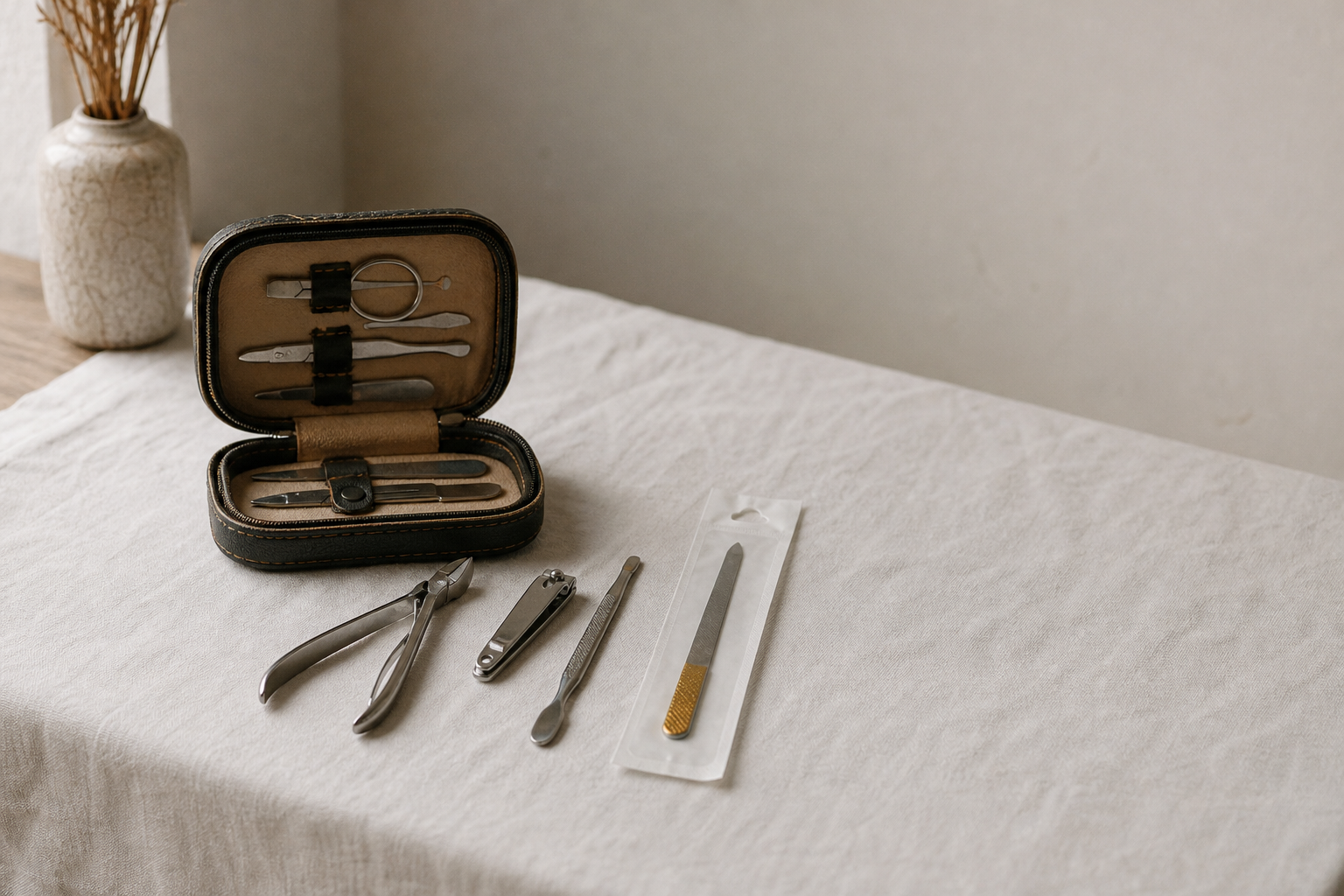
- Treatment tools for every service on your menu, with a spare for anything that can fail
- Single-use gloves, aprons and face coverings where the treatment calls for them
- Disposable couch roll, liners and protective sheets for floors and furniture
- Sealed single-use items such as applicators, files and spatulas, opened in front of the client
- Hospital-grade surface disinfectant and hand sanitizer
- Clean towels in sealed bags, with a separate bag for used linen
- A lined waste bag so you take all rubbish away with you
- A portable light source, because home lighting is rarely good enough for precise work
- An extension lead suitable for professional equipment
Packing for Hygiene and Discretion
Separate clean from used at every stage. Use labeled cases for clean tools, a sealed container for used items, and a dedicated bag for laundry. Nothing used should touch anything clean on the way to the next client.
Discretion affects how you pack, too. Choose understated, well-kept cases over branded bags, and keep the kit compact enough to carry in a single trip from the car where you can. A calm, ordered setup reassures a client before you have started work.
Equipment Worth Investing In Early
Spend first on the pieces that shape every appointment. A lightweight, sturdy portable couch or chair is essential for massage, facials and brows. A daylight lamp improves makeup, lash and skincare results. Wheeled cases protect your back and your equipment. Sterilization equipment suited to your treatments protects your clients and your insurance. Replace low-cost tools as you grow, but buy the items you use every day to a professional standard from the start.
Pricing Your Services for Home Visits
A salon price covers the treatment and the overheads of a fixed room. A mobile rate has to cover the time on either side of the treatment, which your client never sees.
What to Factor Into a Mobile Rate
Build each price from these components:
- Treatment time: the hands-on service itself.
- Setup and pack-down: couch, lighting, protective sheets and cleaning.
- Travel: time on the road and fuel or transport costs in each direction.
- Consumables: disposables, products and laundry for each visit.
- Insurance and kit maintenance: spread across your annual bookings.
- Timing: early mornings, late evenings and event days can command more.
Many mobile therapists set a minimum booking value so a short treatment still covers the journey. Others add a travel band for longer distances. Whatever you choose, state it clearly before the client books.
Comparing a Price List Across Service Types
Different services carry very different hidden costs. Use this framework to set relative rates across your mobile beauty therapist price list.
| Service type | Setup and pack-down | Kit load | Pricing consideration |
|---|---|---|---|
| Event makeup | Light | Compact case, lamp | Premium for early starts and multiple faces |
| Hair styling | Moderate | Tools, products, power | Allow for drying and finishing time |
| Facials and skincare | Moderate to heavy | Couch, devices, linen | Electrical equipment and linen raise costs |
| Massage | Heavy | Couch, oils, linen | Factor in couch handling and room preparation |
| Nails and gel | Moderate | Lamp, tools, disposables | Higher consumable cost per visit |
| Brows and lashes | Light to moderate | Lamp, couch or chair | Precision lighting and patch testing |
| Multi-treatment rituals | Heavy | Full kit | Price as a package, not a sum of parts |
For figures by treatment, see our guide to a fuller mobile beauty therapist price list. If you work with hair, you can also read about how mobile hair pricing compares across colour, keratin and extensions.
Finding High-End Clients Without Chasing Leads
Skill and kit matter far less if no one books. Client acquisition is where many new mobile therapists stall, and the reason is trust.
Why Independent Marketing Falls Short for Home Visits
A client choosing a salon can walk past it, read its reviews and see the room. A client choosing a mobile therapist is inviting a stranger into their home, often while alone and often for a treatment that involves close contact. Social media posts and flyers show your work, but they do not prove your qualifications, your insurance or your conduct. Building that proof yourself takes many bookings and many reviews, and premium clients tend to wait until it exists.
How Vetted Platforms Bring Clients to You
A vetted beauty platform does the trust-building before the client books. The platform checks the professional, so the client books with confidence and the therapist starts with credibility already in place. Instead of chasing leads, you receive appointments from clients who have chosen a curated service and expect to pay for quality.
This is the model behind ORES's curated network of verified professionals. We do not run an open marketplace where anyone can list. Our professionals are verified and curated across beauty, wellness and lifestyle categories, so clients can book private appointments at home through one trusted service.
What Verification Involves
Verification on a curated platform typically covers:
- Proof of qualifications for each service you offer
- Current public liability and treatment-risk insurance
- A portfolio showing the standard of your work
- Identity checks
- Your approach to hygiene, consultation and client care
Prepare these documents before you apply. A complete, well-presented application signals the same professionalism a client expects at the door.
Setting Up for Your First Bookings
Planning is complete when you can say yes to a booking without scrambling.
A Checklist Before You Accept Your First Client
- Hold the qualifications for every service on your menu.
- Activate public liability, treatment-risk and working away cover.
- Insure your portable equipment.
- Write a risk assessment for each treatment.
- Prepare consultation and patch test records.
- Pack and test your full kit, including power and lighting.
- Finalize a clear price list with travel terms and a minimum booking value.
- Set a cancellation policy and share it at booking.
- Gather certificates, insurance documents and portfolio images for verification.
Scheduling and Travel Logistics
Build buffers into every booking for traffic, parking and setup. Group appointments by area where you can, so travel time does not eat into your working day. Before each visit, confirm the address, parking, access details and the room you will work in. Arrive a few minutes early, set up quietly, and leave time afterwards to clean and restock before the next client.
Good to know
Questions, answered.
Costs depend on your country and services. In the UK, the [VTCT registration fee for the 2026 academic year is approximately £117 on top of tuition, and a comprehensive Level 3 professional kit typically costs £200 to £400](https://www.bwtraining.co.uk/uncategorized/nvq-level-3-beauty-therapy-cost-london-2026-pricing-roi-guide/). You also need insurance, portable equipment such as a couch and lighting, and a budget for travel and consumables.
Usually, yes. A [salon owner's policy generally will not cover an independent mobile therapist](https://www.saloninsurance4u.co.uk/salon-and-beauty-insurance/profession-and-treatment-cover/mobile-beauty-insurance), so you need your own public liability and treatment-risk cover, including working away cover for off-site appointments. Confirm with your insurer that every treatment on your menu is included.
Many therapists start this way. Check your employment contract for any restrictions on private work or working near your salon. Hold your own insurance for mobile appointments, and schedule visits so they never clash with your salon hours.
Requirements vary by country. In the UK, several insurers require an NVQ Level 3 or equivalent before covering facials that use electrical equipment or more invasive massage techniques. Wherever you work, check local licensing rules and make sure your insurer recognizes your qualification for each treatment.
Curated platforms typically ask for proof of qualifications, current insurance, a portfolio and identity checks, and they may review your approach to hygiene and client care. Open marketplaces may let professionals self-list with fewer checks. At ORES, our professionals are verified and curated rather than self-listed. If you are ready to bring your expertise into clients' homes, join ORES's curated network and apply today.
Book with ORES
Verified professionals, at home.
A select circle of verified professionals, who come to you.
Become a member