At-Home Beauty Treatments: 8 Mistakes That Undermine Results
A professional can only work with what the room and the client give them. These eight client-side mistakes quietly undermine even the best at-home beauty treatments, and each one has a simple fix.
In brief
- 01Most disappointing at-home beauty treatments trace back to client-side prep, not the professional's skill.
- 02Skipping a patch test, booking a facial the day before a big event, and working under poor lighting are three of the eight common mistakes that undermine results.
- 03Clearing floor space for a massage table or styling chair matters as much as the treatment itself.
- 04Telling your provider about allergies, medications or skin conditions before the appointment, not during it, protects both safety and outcome.
- 05ORES verifies every professional in its network, but even a highly skilled practitioner can only work with the room, lighting and information the client provides.
Key takeaways
- Most disappointing at home beauty treatments come down to preparation, not the professional's skill.
- Skipping a patch test, booking a peel too close to an important date, and working under poor lighting are among the most common and most avoidable mistakes.
- Clearing floor space for a massage table or styling chair matters as much as the treatment itself.
- Share allergies, medications or skin conditions before the appointment begins, not partway through it.
- Before a chemical peel, stop retinoids at least 7 days ahead (14 days for prescription-strength tretinoin), AHAs/BHAs at least 5 to 7 days ahead, and vitamin C at least 3 days ahead.
- ORES verifies every professional in its network, but even the most skilled practitioner can only work with the room, the light and the information you give them.
What Changes When the Treatment Comes to You
At home beauty treatments can rival anything a salon offers, and in many ways exceed it. They also shift part of the responsibility for the result onto you. At ORES, we bring a select circle of vetted beauty, wellness and lifestyle professionals into private homes, and the difference between a good appointment and an exceptional one is usually settled before anyone arrives.
A salon is built for the work: calibrated lighting, a chair at the right height, a room designed around the treatment. At home, your esthetician, stylist or therapist steps into a space built for living. They bring their training and their tools. They cannot bring a north-facing window, a cleared floor or a full account of the retinol you used the night before.
An at-home beauty treatment is at its best when the client treats preparation as part of the service, not an afterthought. That is why we built a verified network of home-service professionals rather than an open listing. Vetting settles the question of skill. What follows covers the part that remains in your hands.
The 8 Mistakes That Undermine At-Home Beauty Treatments
Each mistake below carries a simple remedy. None asks for technical knowledge, only a little forethought.
Skipping the Patch Test
A new hair color, lash adhesive or active skincare ingredient can provoke a reaction on skin that has tolerated everything else for years. Patch testing exists to catch this before it reaches your face or scalp.
Timing matters more than most people realize. Irritation usually surfaces within hours and is caught at around 24 hours, but allergic responses are slower and can take 48 to 96 hours to appear. For hair color in particular, reactions should be checked at both 24 and 48 hours, because a 24-hour test alone often produces a false negative.
Ask for a patch test when you book, not on the day itself. If the product is new to you, allow slightly longer than two days before the main appointment. Since an allergic response can take up to 96 hours to surface, waiting a little past the 48-hour mark gives a more reliable read than stopping at two days.
Booking a Facial or Peel Too Close to an Event
A facial can bring congestion to the surface. A peel, even a light one, can leave skin visibly flaking for several days. Neither sits well the evening before a wedding, a professional portrait or a long-awaited holiday.
Work backward from the date instead. Schedule resurfacing treatments with enough margin for your skin to settle completely, and reserve the final days before an event for gentle, non-exfoliating care.
Working Under Poor Lighting for Makeup or Skin Treatments
Warm overhead bulbs flatter a dinner party and mislead a makeup artist. Foundation matched under yellow light can read gray or orange in daylight and in photographs. Extractions and brow shaping suffer too, when fine detail is lost to dim light.
Choose a room with steady natural light, ideally one facing a window. For an evening appointment, ask your artist whether they travel with their own lighting.
Leaving No Space for Equipment Like a Massage Table or Styling Chair
A massage therapist needs room to move around the table and shift their stance to apply pressure correctly. A cramped room forces awkward angles, which shortens strokes and limits what the treatment can achieve. Stylists face the same constraint when there is no clear space behind the chair.
Clear the floor before your provider arrives. We cover exact measurements below.
Arriving Unprepared: Makeup, Contacts and Jewelry Left in Place
Every minute spent removing mascara or searching for a dish for your rings comes out of the treatment itself. Contact lenses can be uncomfortable during facials and lash work. Necklaces and earrings interfere with neck and shoulder massage.
Arrive at your own appointment ready. Remove contacts, set jewelry aside, and for skin work, begin with a clean face unless your esthetician prefers to cleanse you herself.
Staying Silent About Allergies, Medications or Skin Conditions
This is the mistake with the most serious consequences. Prescription retinoids, recent acid exfoliation, certain medications, pregnancy, eczema and rosacea can all change what a practitioner should do and which products are safe to use. Mentioning any of this halfway through a peel is too late.
Share relevant health and skincare details when you book, including anything applied to your skin in recent weeks and any nut, fragrance or latex allergies.
Rescheduling at the Last Minute Without Explanation
A short note saying your skin has flared up, or that you have started a new prescription, helps your provider plan accordingly. A silent reschedule leaves them to repeat the same plan and products on a situation that may have quietly changed.
When you move an appointment, add a line of context. It lets your provider adjust the treatment before the next visit.
Treating a Home Visit Like a Walk-In Salon Appointment
A salon absorbs late arrivals and shifting requests because it has staff, space and a schedule built around them. A home visit is planned around you alone. Taking calls, stepping away or changing the brief on arrival costs you part of the result you booked.
Protect the appointment window. Share reference images beforehand, silence your phone, and let the household know the room is in use.
Timing Your Booking Around Events and Skin Sensitivity
The right lead time depends on how reactive the treatment is. Gentle services sit comfortably close to an event. Anything that exfoliates, removes hair or alters skin texture needs more room to breathe. If you are planning around a wedding or celebration, our bridal and event booking checklist sets out the full sequence.
| Treatment | Possible visible after-effects | Safer timing before an event | Raise with your provider |
|---|---|---|---|
| Hydrating or classic facial | Mild redness, occasional surfacing of congestion | Days ahead, not the evening before | Recent actives, sensitivity |
| Light chemical peel | Visible healing in 1 to 7 days; sun avoidance for at least 2 weeks | Well in advance, once skin can fully settle | Retinoids, acids, vitamin C use |
| Medium or deep peel | Medium: 7 to 14 days healing, 4 to 8 weeks sun avoidance. Deep: 14 to 21 days healing, 3 to 6 months strict sun avoidance | Not before an event; treat as a separate project | Medical history, aftercare plan |
| Waxing | Redness, bumps, sensitivity | Not the same day | Retinoids, recent sun exposure |
| Massage | Possible tenderness after deep work | Close to the event is usually fine | Choose lighter pressure if unsure |
Facials and Chemical Peels
Resurfacing treatments carry the most risk of poor timing. Peel depth determines how long skin takes to recover: a light peel needs 1 to 7 days to heal with sun avoidance for at least 2 weeks, a medium peel needs 7 to 14 days with 4 to 8 weeks of sun avoidance, and a deep peel needs 14 to 21 days with 3 to 6 months of strict sun avoidance.
Before any peel, stop retinoids at least 7 days ahead, or 14 days if you use prescription-strength tretinoin at 0.05% or higher. Stop AHAs and BHAs at least 5 days ahead, with 7 days being the safer margin. Pause vitamin C and L-ascorbic acid products at least 3 days ahead, since their acidity can lower skin pH and raise sensitivity. Build these windows into your calendar when you book, rather than trying to catch up the night before.
Before a significant date, a hydrating, non-exfoliating facial is the calmer choice. Save extractions and resurfacing for an earlier appointment.
Waxing and Hair Removal
Waxing lifts a fine layer of skin along with the hair, so treated areas can be red and tender. Retinoids and recent sun exposure make this more pronounced. Schedule waxing well ahead of the event rather than on the morning of, and avoid layering it with a peel on the same area in the same week.
Massage and Body Work
Massage is the most forgiving treatment to schedule close to an occasion. A relaxing session the day before can ease tension and improve sleep. Deep tissue work can leave muscles tender, so if you are unsure how your body will respond, ask for medium pressure and save deeper work for another week.
Preparing Your Home Before the Professional Arrives
Most of the eight mistakes are solved by twenty minutes of setup. For a fuller room-by-room guide, see how to prepare your space before the appointment. The essentials follow below.
Lighting for Makeup and Skin Work
Choose the room with the best daylight and face the chair toward the window rather than away from it. Switch off warm overhead bulbs that cast a yellow tone. For evening appointments, one bright, neutral daylight lamp works better than several dim ones. Your artist can then match shades as they will appear in photographs and outdoors.
Floor Space and Equipment Clearance
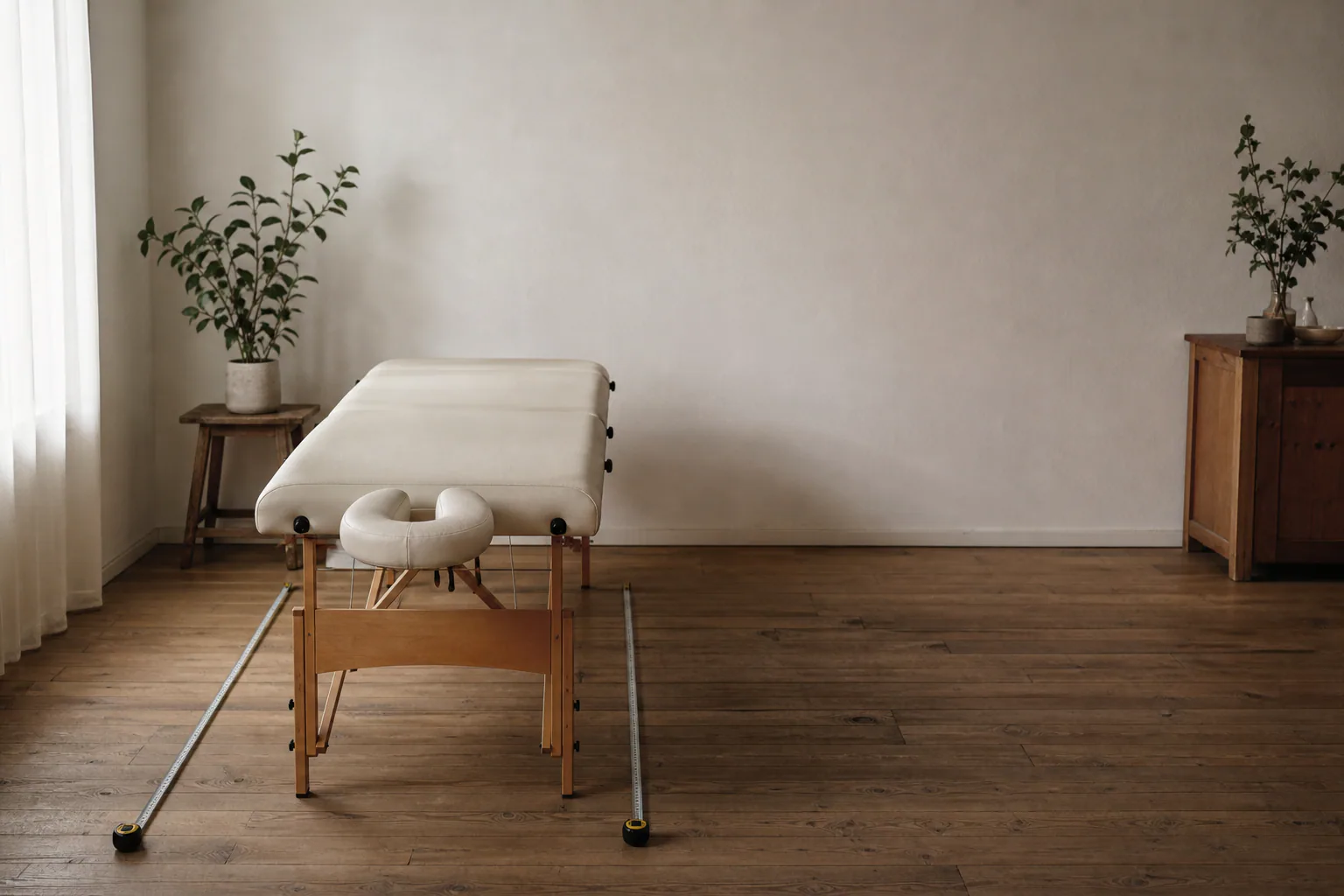
A massage therapist should have three to four feet of space around the table to move and apply proper technique. Measure that clearance on every side, then move rugs that might slide and tables that might catch a hip.
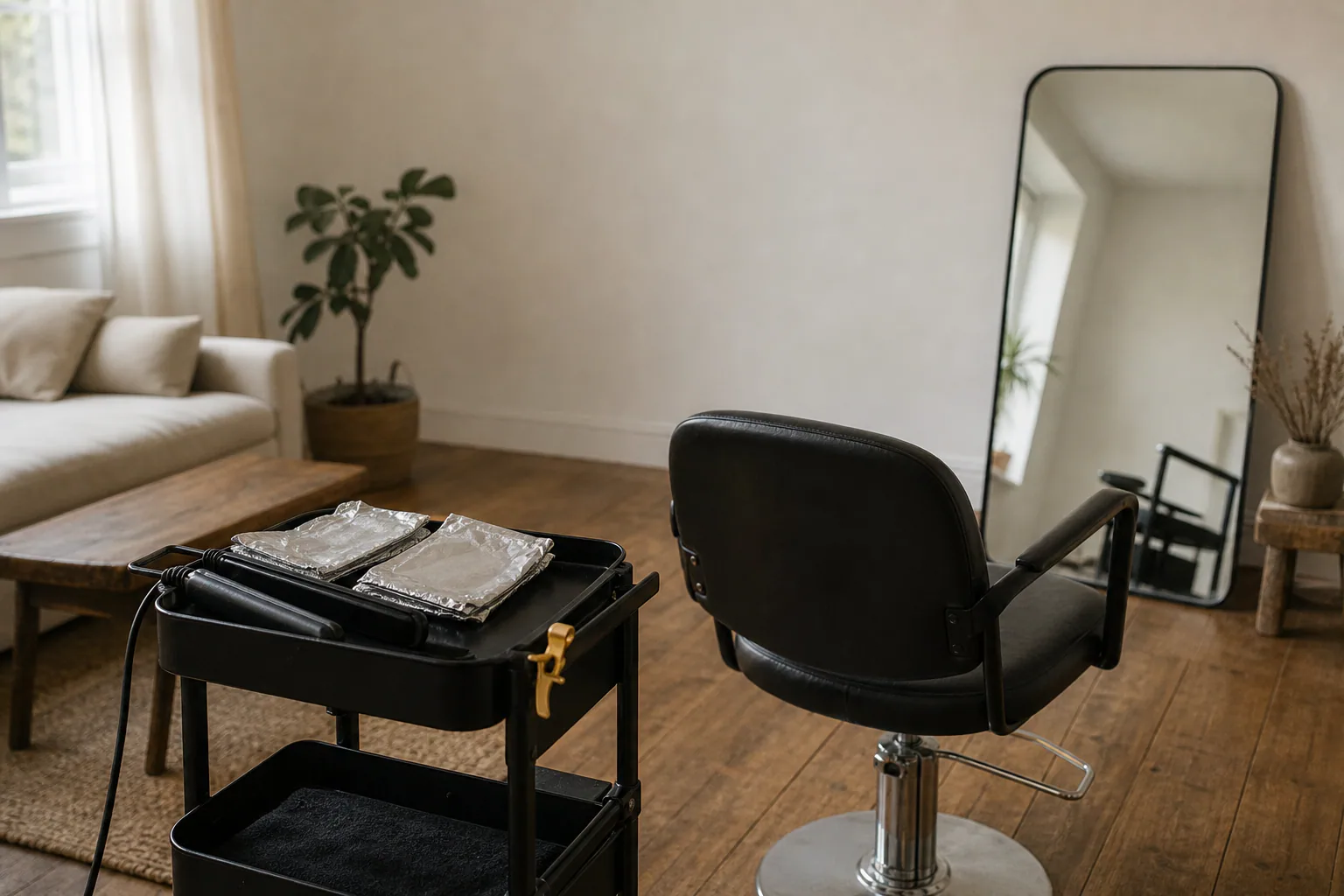
For hair and makeup, clear space behind and to both sides of the chair, and provide a sturdy, stable surface for tools. A dining chair without arms usually works better than a deep armchair. Check that an electrical outlet is within reach for dryers, irons and lamps.
What to Have Ready Before They Arrive
- Contacts out, jewelry removed and hair tied back for skin or massage work.
- A short written note of allergies, medications and any products used on your skin recently.
- Reference images for hair or makeup, saved on your phone.
- Clean towels and access to a sink.
- Pets settled in another room and the household aware that the space is in use.
- Your phone silenced for the length of the appointment.
When the Issue Is the Provider, Not Your Preparation
Not every disappointing result traces back to the client. A trained professional should ask about allergies and recent skincare before applying anything reactive. They should suggest a patch test for new color or adhesives. They should flag a poorly lit room and offer an alternative, and they should decline to perform a peel the day before a wedding, even if asked.
If you prepared well and the practitioner skipped these questions, used products you had flagged, or ignored visible discomfort, the fault lies with them. That distinction is exactly why vetting matters. An open marketplace lists whoever signs up. A curated network checks credentials, experience and conduct before a professional ever reaches your door.
Understanding what a concierge wellness service actually covers helps set the right expectations on both sides. We verify the professional. You provide the room, the light and the honest information. When both halves are in place, at home beauty treatments deliver the result you booked them for.
Good to know
Questions, answered.
It depends on how deeply the treatment works. Even a light peel can cause visible flaking for several days, and medium or deep peels need far longer to heal. For any event where your skin must look fully settled, book resurfacing well in advance and reserve the final days for a gentle, hydrating facial.
Share any allergies, current medications, pregnancy, skin conditions such as eczema or rosacea, and the active products you have used recently, including retinoids, acids and vitamin C. For massage, mention injuries, recent surgery and your preferred pressure. Sending this when you book gives your provider time to plan the right treatment.
Yes, and you should, especially for hair color, lash adhesives or any product new to you. Allergic reactions can take [48 to 96 hours to appear](https://www.theinkeylist.com/blogs/news/why-do-i-need-to-do-a-patch-test), so request the test slightly earlier than two days before the main appointment. A reputable professional will welcome the request.
For massage, allow [three to four feet of clearance around the table](https://pro.massagebook.com/blog/design-a-massage-room) so your therapist can move and apply pressure correctly. For a styling chair, clear room behind and to each side, with a stable surface for tools and an outlet within reach. Remove loose rugs and low furniture that could cause a trip.
Stop using any products the practitioner left with you, rinse the area with cool water and avoid further actives until your skin calms. Contact your provider promptly and describe what you are seeing so they can advise on aftercare. If you notice swelling, blistering or signs of an allergic reaction, seek medical attention. Book a verified professional through [ORES](https://oresglam.com/) and let the treatment, and the result, come home with you.
Book with ORES
Verified professionals, at home.
A select circle of verified professionals, who come to you.
Become a member