
How to Price At-Home Hair Services: Travel, Time, and Treatment Costs
Pricing an at-home haircut isn't the same as pricing a salon one. Travel, setup, and the treatment itself each carry their own cost, and leaving any of them out quietly erodes your margin. Here's how to account for all three.
In brief
- 01At-home hair pricing should separate three distinct costs: travel, time (including setup and pack-down), and the treatment itself.
- 02Setting a flat per-mile or per-zone travel fee, with a minimum distance threshold, avoids undercharging clients who live farther away.
- 03Chair time is only part of total time; stylists who skip setup and pack-down from their pricing often work longer hours for less pay.
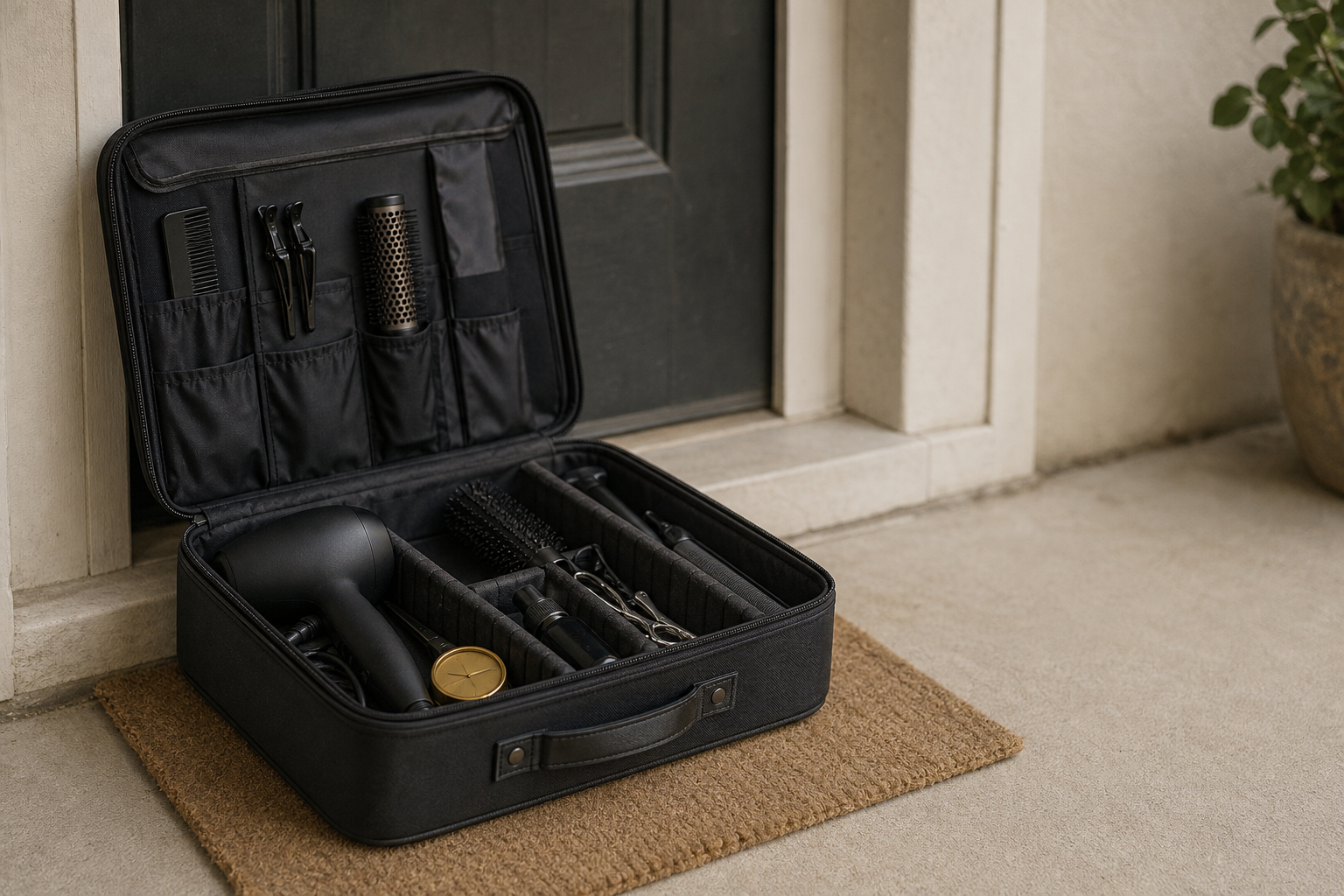
- 04A packed, well-organized mobile kit reduces pack-down time and protects product margins by limiting waste and breakage.
- 05A buffer of 15 to 30 minutes between bookings protects against travel delays and prevents a late first appointment from cascading through the day.
Key takeaways
- Price at-home hair work as three separate costs: travel, time (including setup and pack-down), and the treatment itself.
- A flat per-mile or per-zone travel fee, with a minimum distance threshold, keeps you from undercharging clients who live farther away.
- Chair time is only part of the appointment. Stylists who leave setup and pack-down out of their prices often work longer hours for less.
- A well-packed, organized mobile kit shortens pack-down and protects product margins by limiting waste and breakage.
- A buffer of 15 to 30 minutes between bookings absorbs travel delays and stops one late start from affecting the rest of the day.
How to Price At-Home Hair Services: What Travel, Time, and Treatment Costs Cover
Here is the short answer to how to price at-home hair services: travel, time, and treatment costs are each priced separately, then combined into one clear quote for the client. At ORES, we bring a verified network of hair and beauty professionals into clients' homes, and the professionals who do best with private appointments are the ones whose pricing reflects the full cost of arriving, working and leaving, not just the service itself.
A salon price bundles everything into one chair-time rate. Rent, utilities, the backwash, the towels and the reception desk are all absorbed into the cost of a cut or color, because the client comes to you. At home, that structure stops working. You cover the distance. You bring the station with you. You set up in a space you have never seen and leave it exactly as you found it.
Each of those costs is real, and each needs its own place in your price:
- Travel: fuel, vehicle wear and the hours spent on the road.
- Time: the whole appointment, from arrival and setup to consultation, service and pack-down.
- Treatment: products, consumables, equipment and the skill the work requires.
Price all three on purpose, and a quote stays fair to the client and sustainable for you. Price only the treatment, and travel and time come out of your earnings.
Calculate Your Travel Cost Per Appointment
Travel is the cost stylists most often underprice, because it feels separate from the craft. Clients understand it, though. A clearly stated travel fee reads as professional, not opportunistic. Across the mobile hair market, travel surcharges are usually presented as covering fuel and time on the road, not the service. That framing helps clients accept the fee.
Set a Service Radius and Travel Zones
Start by deciding how far you are willing to travel, measured from your home base or wherever your day usually begins. Then divide that area into zones. A simple version looks like this:
- Inner zone: close enough that travel is included in your base price.
- Middle zone: a flat travel fee added to every booking.
- Outer zone: a higher flat fee, or a per-mile rate beyond a set boundary.
Zones are easier to quote than a pure per-mile rate, and clients can check them at a glance. A per-mile rate is more precise for scattered bookings. Some professionals use zones up to a certain distance and per-mile pricing beyond it. Whichever you choose, base it on real travel time in typical traffic, not distance on a map. A short drive through a congested city center can cost more than a longer run on open roads.
For context, stylists who come to a client's home typically add a travel fee of $25 to $100 or more on top of the base service, and some waive it for group bookings or larger appointments.
Decide on a Minimum Call-Out Distance
A minimum call-out works in two ways. First, it sets the distance below which no travel fee applies, so nearby clients get a clean, simple price. Second, it can set a minimum booking value for longer trips. A quick fringe trim an hour away rarely covers the drive, even with a travel fee added. A minimum spend for outer-zone bookings means every journey earns its place in your day.
Write both thresholds down and apply them every time. Consistent pricing builds trust far more effectively than generous exceptions do.
Price Your Time: Chair Time vs Total Time
Chair time is the period your hands are actually in the client's hair. Total time is everything from the moment you arrive to the moment you leave. At home, the difference between the two can be substantial.
What Counts as Setup and Pack-Down
Setup and pack-down cover all the work around the service that a salon would otherwise absorb:
- Carrying equipment in from the car, sometimes over several trips
- Finding and protecting a suitable working area
- Laying down floor and furniture protection
- Arranging a wash station, if the service needs one
- Positioning tools within reach and checking power outlets
- The consultation, which often runs longer in a relaxed home setting
- Clearing hair, wiping surfaces, packing tools and removing waste
- Carrying everything back out
None of this is optional, and all of it takes your time.
Why Chair-Time-Only Pricing Undercuts You
Imagine pricing a blow-dry by its chair time alone. Once you add setup, consultation and pack-down, the real appointment can run noticeably longer than the time you charged for. Over a full day, those unpaid stretches add up to hours. The result is a schedule that looks busy but produces a weaker hourly return than a salon chair.
The fix is simple. Time several appointments from arrival to departure, note the average for each service type, and build that total into your price. You don't need to itemize setup on the client's invoice. It just needs to be included in the number you quote.
Price the Treatment Itself
With travel and time accounted for, the treatment price covers what you apply and the skill you bring.
Account for Product and Consumable Costs
For a mobile stylist, the core overheads are fuel, products and supplies, and portable equipment such as a wash station. Fuel belongs in your travel fee. Products and equipment belong in the treatment price.
For each service, list what it uses:
- Products: color, developer, toners, treatments, styling products
- Consumables: foils, gloves, capes, towels, neck strips, cleaning supplies
- Equipment wear: dryers, irons and portable basins all need replacing eventually
Cost each item per use, then add it to the treatment. Color work in particular can carry significant product costs, and those costs vary from one client to the next depending on hair length and density. Many professionals price color services by length bands for exactly this reason.
Licensing is another overhead to include. Requirements differ by location. In Massachusetts, for example, everyone providing mobile services must hold a mobile individual registration, and Delaware asks mobile salon operators for a notarized professional-in-charge statement and a detailed floor plan. Whatever your local rules require, the cost of meeting them belongs in your pricing.
Adjust for Skill Level and Treatment Complexity
Two stylists can use the same products and spend the same time, yet produce very different results. Your treatment price should reflect your training, your specialisms and the complexity of the work. Bridal styling, corrective color and textured hair expertise all deserve rates that match the skill involved. Clients who book private, high-end appointments are paying for expertise and judgment, and the price should reflect it.
Build a Sample Pricing Structure
The three components fit together in a predictable way. The table below shows the structure, not fixed figures, so you can apply your own costs and market.
| Component | How to calculate it | What it covers | When it changes |
|---|---|---|---|
| Travel | Flat fee per zone, or per-mile beyond a boundary | Fuel, vehicle wear, time on the road | By client location |
| Time | Average total appointment length multiplied by your hourly rate | Setup, consultation, service, pack-down | By service type |
| Treatment | Product and consumable cost per use, plus a skill premium | Products, consumables, equipment wear, expertise | By hair length, complexity, specialism |
| Group adjustment | Lower per-person rate as group size grows | Shared travel and setup across several clients | By number of people booked |
The last row is worth understanding. In mobile hair and grooming work, tiered per-person pricing is common: a solo appointment is priced highest, and the rate falls for each additional person. One journey and one setup are spread across several clients, so each can pay a little less while your total earnings rise.
As a benchmark, national figures put a standard salon haircut between $15 and $95, with color services between $70 and $215. Across the mobile market, rates generally sit at or above salon pricing before any travel fee is added, which reflects the convenience and privacy clients are choosing. If your quotes fall below the salon range once travel and time are included, revisit each component.
At ORES, we hold every professional in our network to this same discipline, because a client who invites you into their home should never have to guess what the price includes.
Plan Your Mobile Kit and Travel Area
Your kit has a direct effect on your margin. A disorganized kit makes setup slower, pack-down longer and breakage more likely, and all three cost you money.
Organizing a Kit for Speed and Protection
Pack by service, not by item type. A color kit, a cutting kit and a styling kit, each in its own case, means you carry in only what the booking needs. Within each case:
- Store liquids upright in sealed, padded compartments to prevent spills.
- Keep pre-measured consumables in labeled pouches.
- Give hot tools heat-resistant sleeves so you can pack them before they cool completely.
- Keep a dedicated bag for used towels and waste, kept separate from clean stock.
- Restock after each day, not before the next one.
An organized kit protects your product margins. Less waste, fewer broken bottles and no duplicate purchases all keep your treatment costs where you priced them.
Setting Up a Working Area in a Client's Home
Ask about the space when the client books: where the appointment will take place, the floor surface, access to water and the nearest power outlets. A kitchen or bathroom with a hard floor and good light is ideal. Lay protection down before you open a single case. Keep your tools on one surface, and place the client's chair facing natural light where possible.
Set a Booking Schedule That Protects Your Margin
Careful pricing can still be undone by a crowded, disorganized calendar. Scheduling is where the travel and time you have priced either hold or slip away.
Buffer Time Between Appointments
Leave 15 to 30 minutes between bookings. The buffer absorbs traffic, slow parking and a consultation that runs over. Without it, one late arrival pushes every later appointment back, and the last client of the day gets a rushed version of your work. Clients paying for a private, high-end service notice the difference.
Grouping Bookings by Area
Wherever possible, cluster appointments by zone. Offer clients in a given area specific days, so you can work through a single neighborhood rather than crossing the map between bookings. Grouping reduces the travel you can't charge for and leaves room for one more appointment.
Handling Cancellations and Late Starts
A late cancellation for a mobile appointment costs more than an empty salon chair, because you may already have travelled or turned away other work. Set a written cancellation policy with a clear notice window and a fee for late cancellations or no-shows. Share it when the booking is made. For late starts caused by the client, decide in advance whether you will shorten the service or charge for the extra time, and say so politely but clearly.
Related: Planning logistics for at-home event appointments · Building a steady client base with at-home appointments · Register as a hair professional on ORES
Good to know
Questions, answered.
Stylists who visit clients at home [typically add $25 to $100 or more](https://fash.com/costs/hair-stylist-cost) to the base service cost. The right amount depends on your travel time, fuel costs and local market. A zoned structure with a minimum call-out distance keeps your travel fees consistent and easy for clients to understand.
Setup and pack-down need to be priced, but they don't have to appear as separate items on the invoice. Most professionals include them in the service price by timing the whole appointment, from arrival to departure. What matters is that the time is paid for.
Generally, yes. Across the market, mobile rates sit at or above standard salon pricing even before travel fees are added. Clients are paying for privacy, convenience and personal attention, and your price should reflect the extra time and travel the service requires.
Publish a written policy with a notice window and a late-cancellation fee, and share it at booking. Some professionals take a deposit for longer or more distant appointments. Applying the policy consistently protects your schedule and shows clients you take your time seriously.
Pack separate cases for each service type, with products, consumables, protective sheeting, towels, hot tools and a portable wash station if your services need one. Add a waste bag and cleaning supplies so you leave the space exactly as you found it. Restock after every working day.
Assign zones to specific days and offer clients in each area those days first. Keep a 15 to 30 minute buffer between nearby appointments rather than packing them back to back. Over time, a strong base of clients in each zone makes clustering much easier. At ORES, we built our network on exactly this kind of precision: verified professionals, clear pricing and no surprises for the client who opens the door. When your rates account for travel, time and treatment in full, you are ready for the standard ORES clients expect.
Book with ORES
Verified professionals, at home.
A select circle of verified professionals, who come to you.
Become a member