How to Prepare a Clean, Professional Mobile Nail Kit (and Turn First Visits Into Regulars)
A clean, well-organized nail kit is the first thing a client notices and the last thing they forget. Here is how to build one that earns rebookings, not just compliments.
In brief
- 01A mobile nail kit should separate sanitized tools from used ones using two distinct containers, not one shared pouch.
- 02Clients decide whether to rebook within the first few minutes of a visit, often based on what they see you unpack.
- 03Single-use files and buffers, along with tools sterilized between every client, address the trust gap mobile nail techs face most.
- 04A short, consistent closing ritual (aftercare card, next-visit suggestion) does more for retention than discounting your rate.
- 05Technicians who document their sanitation process on their profile are more likely to be chosen by clients booking through a verified platform like ORES.
Key takeaways
- Keep sanitized tools and used tools in two separate, clearly marked containers. One shared pouch is never enough.
- Clients often decide whether to rebook within the first few minutes of a visit, based largely on what they watch you unpack.
- Single-use files and buffers, plus multi-use tools cleaned and disinfected or sterilized after every client, close the trust gap mobile nail technicians face most.
- A short, consistent closing ritual (an aftercare card and a suggested next visit) does more for retention than lowering your rate.
- When you document your sanitation process on your profile, clients booking through a verified platform like ORES can see your standards before you arrive.
Why Your Kit Is the First Thing a Client Judges
To prepare a clean, professional mobile nail kit, build it around one principle: the client should see that every tool is clean before it touches them. In practice, that means sealed or freshly disinfected implements, a separate container for used tools, new single-use files and buffers for each client, and a layout that unpacks in a calm, deliberate order. At ORES, we connect clients with verified professionals who work in private homes, and the kit is where trust starts. Before you have painted a single nail, the client has already formed a view of your standards.
A salon earns trust through its premises. A mobile technician has only what comes out of the bag.
What clients notice in the first two minutes
Clients rarely inspect your tools closely. They take in the overall picture. Within the first minutes of a visit, they register:
- Whether your implements come out of a sealed pouch or a closed, labeled case, or loose from a bag
- Whether you wash or sanitize your hands before touching anything
- Whether files and buffers look new or worn
- Whether there is a visible place for used tools to go
- Whether your setup looks orderly or improvised
None of this needs explaining. A client who sees you open a sealed pouch of implements understands its meaning at once. A client who sees a worn, grey-edged buffer understands that too.
The difference between a salon kit and a mobile kit
A salon kit sits beside fixed equipment: a sink, a disinfection station, storage, and a back room where used tools wait out of sight. A mobile kit has to carry all of that function with it. Every step that happens behind the scenes in a salon happens in front of the client, in their own home.
That visibility works in your favor. A clean, well-organized process, performed openly, can reassure a client more than a salon they never see behind.
Sanitation Standards That Replace a Salon's Backroom
Hygiene is the foundation of repeat business. A client will forgive a slightly uneven cuticle line long before they forgive a tool they suspect was used on someone else. Clients increasingly know what to look for before they book anyone into their home.
Rules are set locally, so the board where you work has the final word. The examples below show how seriously regulators treat these standards.
Sanitizing versus sterilizing tools
These terms are not interchangeable.
- Cleaning removes visible debris with soap and water or a cleaning solution. It always comes first.
- Sanitizing reduces germs on a surface. It suits hands and general surfaces, not implements.
- Disinfecting uses a registered chemical to kill a broad range of microorganisms on non-porous tools. California, for example, requires an EPA-registered disinfectant with demonstrated bactericidal, fungicidal and virucidal activity, used according to manufacturer's instructions.
- Sterilizing destroys all microbial life, usually with an autoclave. It is the highest standard, and the one clients respect most.
Contact time matters as much as the product. Georgia requires multi-use implements to be cleaned of all visible debris after each use and disinfected by complete saturation or immersion for a set period before reuse. A quick spray and wipe rarely meets the label's instructions. Some places also expect specific equipment: Virginia requires each nail technician to have a wet disinfection unit at the individual's station, which a mobile technician has to carry along.
Single-use items worth the extra cost
Porous items cannot be disinfected reliably, so they go to one client and no one else. Washington lists buffer blocks, sanding bands, toe separators or sleeves, orangewood sticks and disposable nail bits, and treats the presence of used articles in the work area as evidence of reuse. Maryland states plainly that an emery board or disposable file shall be discarded after its use on a client.
Opening a new file in front of the client is one of the simplest trust signals available to you. Build the cost into your service price rather than cutting into your margins.
Transporting tools without recontaminating them
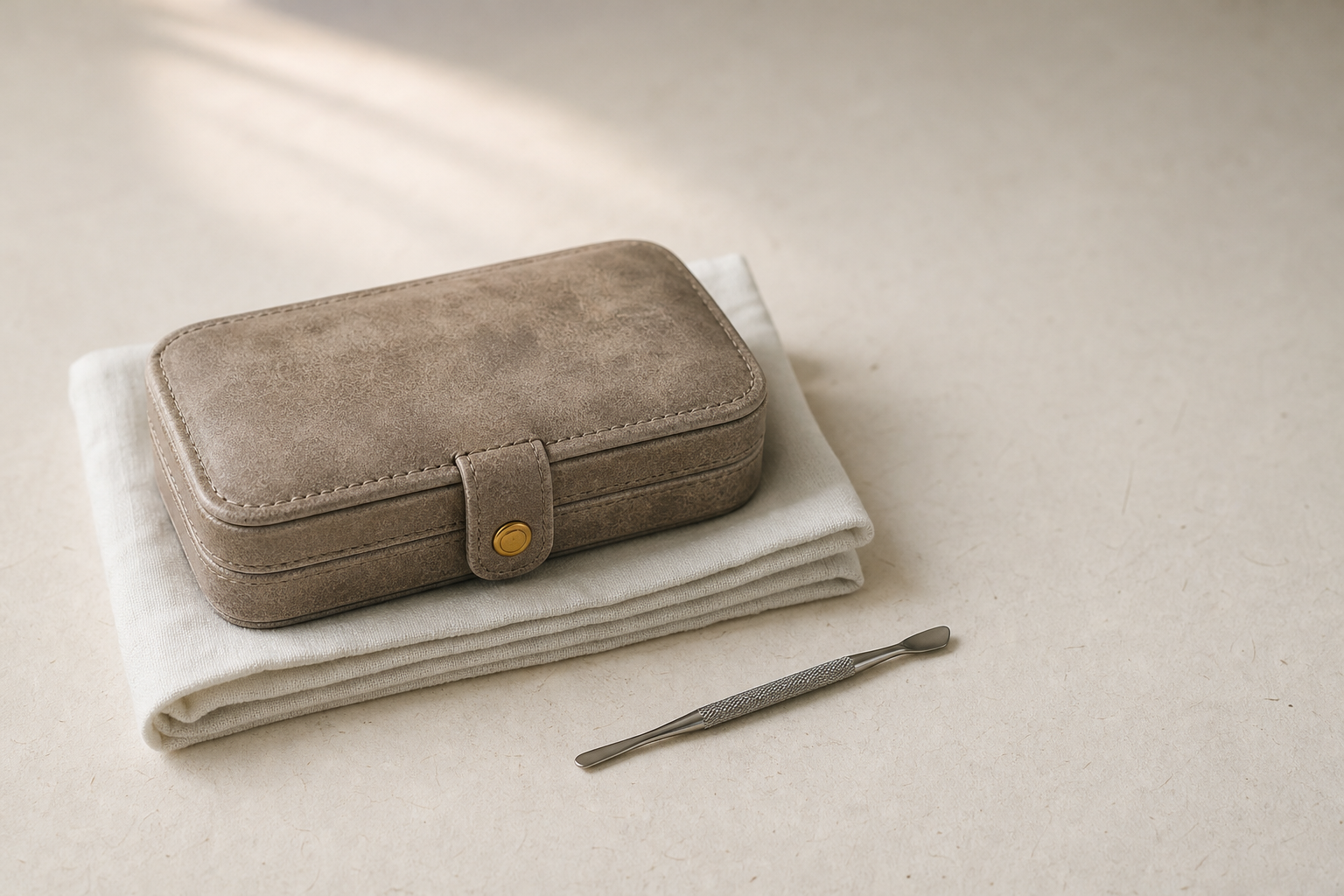
Contamination often happens in transit, not during service. Keep two distinct containers:
- A clean container, hard-sided and closed, holding sterilized pouches and disinfected implements.
- A used container, clearly labeled, where tools go straight after use and stay until you can reprocess them.
Never return a used tool to the clean side, even for a moment. If a clean tool falls on the floor, it moves to the used container.
What to Pack: How to Prepare a Clean, Professional Mobile Nail Kit
Use this checklist to build a new kit or audit the one you have.
Tools and implements
- Cuticle nippers and pushers, sterilized and pouched
- Nail clippers and stainless steel files (if you use metal files)
- Fresh single-use files, buffers and orangewood sticks for each client
- Nail drill and bits, with disposable bits or bits reprocessed between clients
- Brushes for gel or acrylic, cleaned and stored covered
- Compact, rechargeable lamp if you offer gel
Sanitation supplies
- EPA-registered disinfectant suitable for your tools, used per the label
- A lidded immersion container sized for your implements
- Hand sanitizer and nitrile gloves
- Disposable towels and a washable or disposable table cover
- Sealable bags for single-use waste
- The labeled used-tool container
Finishing and aftercare items
- Base, color and top coats with clean, closed lids
- Cuticle oil in single-use applicators or a dropper bottle that never touches skin
- Aftercare cards
- A small mirror so the client can see the finished result before you pack up
The table below shows how to handle each category after a client.
| Item | Single-use or reusable | After each client |
|---|---|---|
| Emery boards, buffers, sanding bands | Single-use | Discard in a sealed bag |
| Orangewood sticks, toe separators | Single-use | Discard in a sealed bag |
| Nippers, pushers, clippers | Reusable | Clean, then disinfect or sterilize |
| Metal files | Reusable | Clean, then disinfect or sterilize |
| Drill bits | Either | Discard disposables; clean and disinfect metal bits |
| Table cover, towels | Either | Launder or discard |
| Foot basin (pedicures) | Reusable | Disinfect for the full label contact time |
Basins deserve particular care. Connecticut's guidance notes that, for foot spa basins, generally 10 minutes of contact time is required with a qualifying disinfectant.
Setting Up at a Client's Table in Under Five Minutes
A smooth setup makes an at-home nail appointment feel unhurried. Rehearse it until it takes under five minutes and needs no thought.
Protecting the client's furniture
- Ask where the client would like to sit, and confirm good light.
- Lay a protective cover across the table before anything else touches it.
- Place a towel on top for the client's hands.
- Keep acetone, polish and lamps on the covered area only, never on bare wood or stone.
Clients in fine homes notice how you treat their surfaces. Care with their furniture signals care with their hands.
Arranging tools for a calm, visible process
Sanitize your hands in view. Open sterilized pouches in front of the client. Set implements on the clean side of the table in the order you will use them, with the used container on the opposite side. Unwrap a new file and buffer only once the client is seated.
The order matters. A layout that moves from clean to used, consistently left to right, tells the client you have a system without your saying a word.
The Closing Ritual That Makes Clients Rebook on the Spot
The last five minutes shape the memory of the visit. A consistent sequence prompts rebooking without pressure or price cuts.
Aftercare guidance that protects the result
Talk through care before you hand over the card. Keep it brief and specific to the service:
- How long to wait before heavy hand use or hot water
- Applying cuticle oil daily
- Wearing gloves for cleaning and dishwashing
- Not peeling or picking at gel or polish
- What to do if a nail chips or lifts
Then leave a printed aftercare card with the same points and your booking details. A written card protects your work after you have gone.
Suggesting the next appointment before you pack up
While the client admires the result, suggest a timeframe based on the service, and offer one or two specific options for the next booking. Then pack up, used tools last, in front of the client.
Done this way, rebooking feels like part of the service rather than a sales pitch.
Building a Local Client Base Through Consistency, Not Discounts
A steady client base comes from being reliably excellent, visit after visit. Regular clients choose you because they know what they will get.
Why consistency beats price cuts
Discounting tells a client your time is negotiable, and it attracts clients who will leave for the next lower price. Consistency does the opposite. Arriving on time, setting up the same way, holding the same hygiene standard and finishing with the same ritual builds a reputation that justifies your rate. For clients who invite a professional into their home, predictability is part of the appeal.
Keeping notes on each client's preferences
After each visit, record:
- Nail shape, length and preferred finish
- Colors chosen and colors declined
- Skin sensitivities or product reactions
- Home details: parking, entry instructions, where they like to sit
- Their usual rebooking interval
Arriving already knowing a client prefers a short almond shape and a sheer neutral makes the second visit feel personal. By the third, you are their technician.
How Verification Makes Your Kit and Credentials Count
Clients booking a professional into their home want assurance before the door opens. That is why our network is curated and verified rather than open to anyone who lists themselves. For a nail technician, it means the standards in this article become visible and credible to the people deciding whether to let you in.
What ORES checks before listing a nail professional
Every professional we present has been verified and selected, not self-listed. For a nail professional, the strongest case rests on the points clients care about most: current credentials for the places you work, a clear sanitation process, a kit that reflects it, and work that shows consistent quality.
Making your process visible on your profile
Describe your sanitation routine in plain terms on your profile: sterilized or disinfected implements, single-use files and buffers for every client, separate clean and used containers. Add photographs of your kit and a finished setup. A client comparing professionals on ORES is choosing someone to welcome into a private space. Showing your process removes the doubt before it forms.
Related: Hygiene checks clients should make first · What vetting should actually mean · Search for nail technician roles on ORES
Good to know
Questions, answered.
Multi-use implements should be cleaned and then disinfected or sterilized after every client, without exception. Regulators such as California's barbering and cosmetology board require disinfection after each use. Sterilizing between every client is the highest standard and the one most reassuring to clients in a private home.
Sanitizing reduces germs and suits hands and general surfaces. Disinfecting uses a registered chemical, applied for the full label contact time, to kill a broad range of microorganisms on non-porous tools. Implements need disinfection or sterilization, not just sanitizing.
In most places, nail services require a license, and mobile work is usually held to the same sanitation standards as a salon. Rules differ by state and country, and some set specific requirements for mobile services. Check with the licensing board in each area where you take bookings.
Discard them after a single client, into a sealed bag kept in your used-waste container, and remove the bag with you. Never leave used items in the work area or carry them back into your clean kit. Several jurisdictions treat used single-use items found in a work area as evidence of reuse.
Include how long to avoid heavy hand use or hot water, a reminder to apply cuticle oil daily, advice to wear gloves for household tasks, and not to pick at the finish. Add what to do if a nail chips or lifts. Finish with your booking details and a suggested timeframe for the next visit. Ready to bring your verified, professional nail service to clients who value trust and consistency? [Book a professional with ORES](https://oresglam.com/) and start building your regulars today.
Book with ORES
Verified professionals, at home.
A select circle of verified professionals, who come to you.
Become a member