Personal Wellness Appointments at Home: A Monthly Routine Guide
A well-run month of personal wellness appointments at home rests on rhythm, not spontaneity. Here is how to space massage, facials and body treatments so each one does its job, and what to budget for the rotation as a whole.
In brief
- 01A balanced monthly rotation typically includes one massage, one facial and one body treatment, spaced roughly a week apart so no single service overlaps or undoes another.
- 02Massage frequency depends on goal: once a month maintains general relaxation, while twice a month suits those managing tension from desk work or training.
- 03In-home sessions cost more per visit than a studio appointment because the fee covers the practitioner's travel time and equipment, a trade-off covered in detail in our in-home massage therapy cost guide.
- 04Booking through a single curated platform like ORES removes the need to vet, schedule and coordinate separate providers for each category of treatment.
- 05Preparing your space in advance, a quiet room, clean linens, enough space for a table, shortens setup time and protects the privacy of the session.
Key takeaways
- A balanced monthly rotation usually includes one massage, one facial and one body treatment, spaced about a week apart so no service overlaps with or undoes another.
- Massage frequency depends on your goal. Once a month maintains general relaxation. Twice a month suits anyone managing tension from desk work or regular training.
- An in-home session costs more per visit than a studio appointment because the fee covers the practitioner's travel time and equipment, not a lesser treatment.
- Booking through a single curated platform like ORES means you no longer vet, schedule and coordinate a separate provider for each category of treatment.
- Preparing your space in advance (a quiet room, clean linens, enough floor area for a table) shortens setup and protects the privacy of the session.
What Counts as Personal Wellness Appointments at Home
Personal wellness appointments at home are professional treatments delivered in your own space: massage, facials, skincare and body treatments such as scrubs, wraps and other spa services. The practitioner brings the table, products and tools. You provide a quiet room and the time. At ORES, we connect clients with a select circle of verified wellness practitioners who travel to them, so a month of care can be planned without a single trip to a spa.
The simplest monthly routine rests on three treatments. A massage addresses muscles and stress. A facial cares for the skin of the face and neck. A body treatment covers everything below the collarbone that a facial does not. Together they cover the body evenly without crowding the calendar.
What sets an at-home appointment apart is control. You choose the hour, the room, the music, and whether anyone else is home. For many clients that privacy is the whole point, especially before an event or after a demanding week. A luxury wellness concierge service builds on this by handling the selection and scheduling of practitioners. You decide what you want and when. The service finds the right person to deliver it.
The Monthly Rotation: Massage, Facial and Body Treatment
A monthly wellness routine works best when each treatment has its own week. Spacing the services gives your skin and muscles time to respond to one treatment before the next begins. It also keeps any single day from becoming a marathon.
| Treatment | Suggested frequency | Primary focus | Why the spacing matters |
|---|---|---|---|
| Massage | Once a month for maintenance; twice a month for ongoing tension | Muscles, circulation, stress relief | Muscles can feel tender for a day or two after deep work, so it helps to keep other hands-on treatments away from that window |
| Facial | Once a month | Cleansing, exfoliation, hydration of the face and neck | Exfoliated skin needs a few calm days without new products or heat |
| Body treatment | Once a month | Exfoliation, hydration and softening of the skin on the body | A body scrub right after a massage or facial asks too much of the skin at once |
How Often to Schedule a Massage
Massage frequency follows your reason for booking. For general wellbeing, a certified massage therapist suggests one 80-minute massage per month as a solid baseline, rising to two 80-minute sessions a month for chronic pain. That pattern fits most routines well. A single monthly massage keeps stress in check. A second session, two weeks after the first, suits anyone carrying tension from long hours at a desk or a heavy training schedule.
Therapists often recommend more frequent sessions during periods of acute stress or injury, then easing back to a maintenance cadence once symptoms ease. A steady, sustainable rhythm also serves you better than an ambitious one you abandon after a few months; it is better to book a little less often than to stop altogether.
How Often to Schedule a Facial
One facial a month suits most skin types and fits neatly into the rotation. The service usually includes cleansing, exfoliation and moisturizing, with more advanced techniques available depending on the practitioner and your skin goals. If you have a specific concern, ask your aesthetician whether a different interval would serve you better. Once you have their recommendation, hold to it. Consistency matters more than intensity.
Where Body Treatments Fit In
Body treatments are the most flexible part of the rotation. A scrub, wrap or hydrating treatment once a month keeps skin smooth and gives the routine a sense of indulgence. Place it in the week furthest from your facial, or just before an occasion when skin will be on show. If you book two massages a month, the body treatment can take the remaining week on its own.
Budgeting for a Month of Wellness at Home
Budgeting for wellness becomes simpler once you see what you are paying for. A month of three or four appointments is a planned expense, much like a gym membership or a standing hair appointment. Thinking in monthly terms helps you choose the cadence you can sustain over the long run.
What Drives the Cost of an In-Home Session
An in-home session runs higher than a studio visit, and the reasons are straightforward. Mobile therapists typically charge $100 to $150 for 60 minutes plus a $20 to $50 travel fee, the highest of any setting, because the client is paying for convenience and the therapist's commute. Session length, the practitioner's experience, specialized techniques and the time of day all shape the final figure as well.
The same logic applies to facials and body treatments. Advanced facials that rely on specialized equipment cost more than a classic cleanse and hydrate, and the practitioner carries that equipment to you. In every case, the premium reflects what it takes to bring the full studio experience into your home.
Spreading the Cost Across the Month
A rotation naturally spreads spending into weekly portions rather than one large outlay. Some practical ways to shape it:
- Set a monthly figure first, then choose the treatments that fit inside it, rather than booking first and totaling later.
- Prioritize by goal. If tension is your main concern, the second massage earns its place before an advanced facial does.
- Vary the session length. A shorter body treatment one month can make room for a longer massage when you need it most.
- Keep the routine. It is better to book a little less often than to stop altogether.
Sequencing Your Appointments Across Four Weeks
A clear wellness schedule removes the decisions from each week. Once the order is set, booking becomes a matter of choosing the day.
A Sample Four-Week Rotation
- Week one: massage. Begin the month by releasing accumulated tension. A longer session works well here if your schedule allows it.
- Week two: facial. By now any post-massage tenderness has faded, and you can lie comfortably through a full facial.
- Week three: body treatment. Exfoliation and hydration for the body, a full week clear of the facial so the skin is calm.
- Week four: rest or a second massage. Leave this week open for recovery, or book a second massage if you are managing ongoing tension from work or training.
This monthly rotation repeats cleanly. Week four leads into the next week one, so the gap between massages stays even whether you book one or two each month.
Adjusting the Rotation Around Travel or Events
Life rarely follows a four-week grid. When travel interrupts, shift the whole rotation rather than squeezing two treatments into one week. If you miss a facial, move it forward and let the body treatment follow a week later.
For an important event, work backward from the date. A facial a few days beforehand gives skin time to settle, so it looks its best rather than freshly treated. A massage the day before can ease nerves, though some people prefer it earlier in the week so they feel fully rested. A body treatment fits comfortably earlier in the run-up. After long-haul travel, a massage soon after you return is often the most welcome appointment of the month.
Preparing Your Home for Each Visit
A little preparation lets the practitioner focus on the treatment rather than the setup. It also keeps the session calm and private from the moment they arrive.
Space and Setup
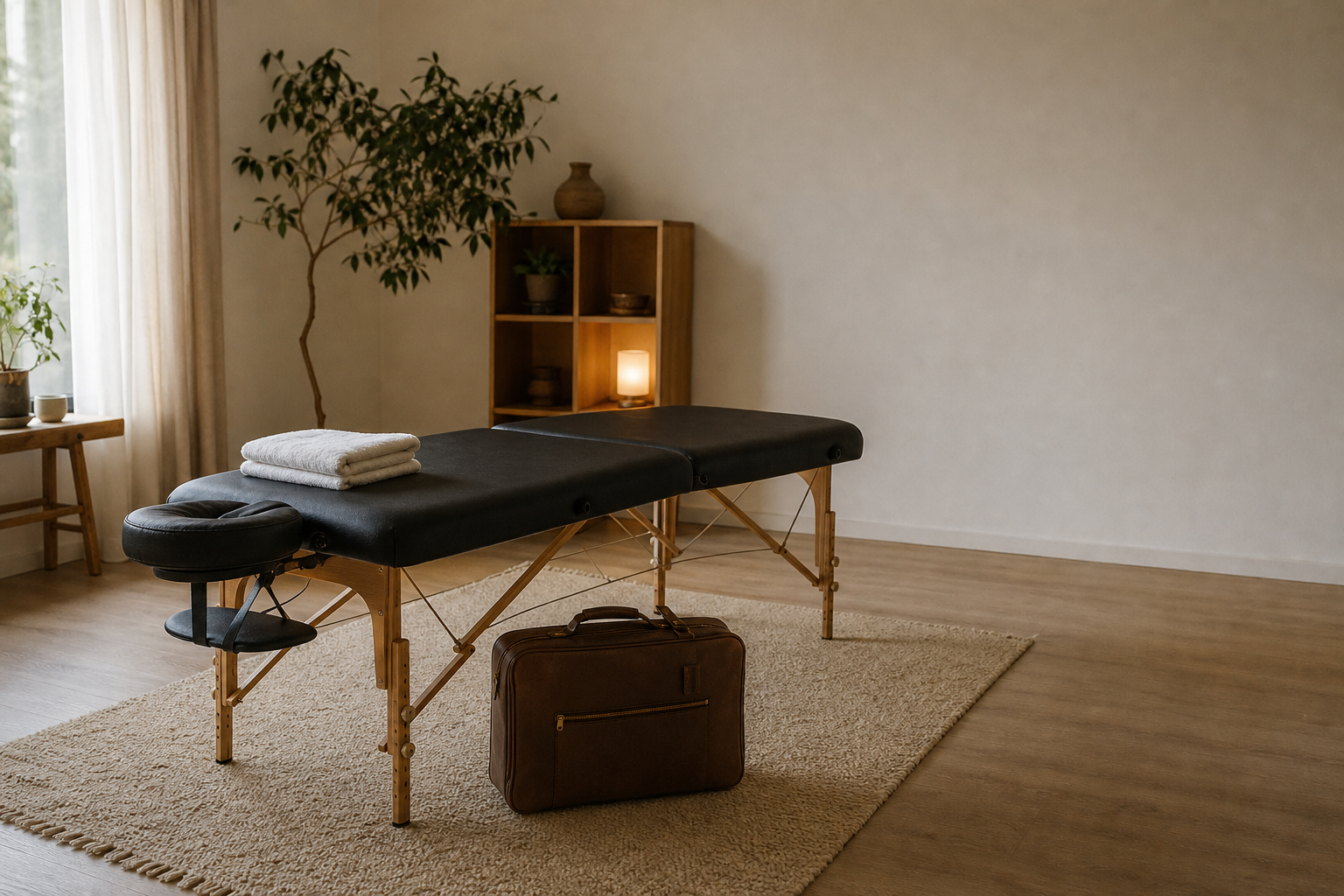
- Choose the room in advance. A bedroom, study or quiet living area works well. A massage table needs open floor space around it so the practitioner can move freely on all sides.
- Clear the floor. Move rugs that could slip, along with low furniture and anything fragile.
- Have clean linens ready. Most practitioners bring their own, but fresh towels nearby are always useful.
- Check the lighting and temperature. Soft, adjustable light and a warm room make a real difference, particularly for body treatments.
- Note the nearest outlet. Heated tables and some facial equipment need power.
- Plan for parking and access. Share entry details, building codes or parking instructions ahead of time.
Privacy and Comfort
- Choose a time when the house is quiet, or let others at home know a session is underway.
- Silence your phone and any smart speakers you would rather not hear during the session.
- Keep pets in another room for the duration.
- Share relevant health information with the practitioner before they begin, including allergies, skin sensitivities, recent injuries and any areas to avoid.
- Have water ready for after the session.
An at-home wellness appointment should feel like a private retreat. These small steps make that possible.
Why a Curated Platform Beats Juggling Separate Bookings
Building a monthly rotation on your own means finding a massage therapist, an aesthetician and a body treatment specialist, then checking the credentials of each, comparing availability and keeping three sets of messages straight. When one cancels, the sequence unravels and the search begins again.
Credentials alone take real effort to confirm, because standards differ widely between countries and states. In Indiana, for example, licensed massage therapists must complete 625 hours of supervised instruction, pass the MBLEx exam, undergo a national criminal history background check and carry professional liability insurance before they may practice. Georgia sets its own minimum liability coverage, and many states tie licensure to a background check. Few clients have the time to research these rules for every practitioner they invite into their home.
A luxury wellness concierge service exists to take that work off your hands. At ORES, our network is curated rather than self-listed. Verified wellness professionals across massage, skincare and spa treatments are vetted before they join, so you choose a treatment and a time rather than a stranger from an open listing. One platform holds your whole rotation, from the first-week massage to the third-week body treatment, and when plans change you adjust everything in one place.
The result is a routine that runs quietly in the background.
Related: In-home massage therapy cost guide
Good to know
Questions, answered.
Booking each month's rotation at the start of the month gives you the widest choice of times and practitioners. Evenings, weekends and dates before holidays tend to fill first, so reserve those earliest. For a last-minute need, on-demand booking can still find you a verified professional.
You can, and many clients enjoy a longer pampering session before an event. Book the massage first, then the facial, so oils and pressure on the face come before the aesthetician's careful work rather than after it. For a regular monthly routine, though, spacing the two a week apart lets each treatment settle and gives you something to look forward to more often.
Tipping customs vary by country and by service, so there is no single rule. Where gratuity is customary, many clients tip an in-home practitioner as they would at a spa, in recognition of the extra effort of travel and setup. Check the booking details for guidance before your appointment.
Practitioners set aside travel time as well as the session itself, so give as much notice as you can. Review the cancellation terms shown when you book, since they explain the window for changes. When you do need to move one appointment, shift the rest of the rotation with it to keep your spacing intact.
No special equipment is needed. Massage therapists and aestheticians bring their own table, linens and products. You only need a quiet room with enough open floor space for a table, a comfortable temperature and access to a power outlet. Ready to put your rotation on the calendar? [Book a professional](https://oresglam.com/) through ORES and bring verified massage, facial and body treatment specialists into your home on your schedule.
Book with ORES
Verified professionals, at home.
A select circle of verified professionals, who come to you.
Become a member